
There are a variety of fascinating animals below the ocean's surface, each having its own evolutionary history. Lobsters stand out among these extraordinary aquatic animals as fascinating instances of adaptation and survival. The evolution of lobsters gives us an insight into the wonders of natural selection as we follow them from their simple beginnings millions of years ago to their current various and intriguing shapes. Lobsters have evolved through a process of natural selection, which has shaped their characteristics and allowed them to adapt to changing environments over time. Let's go through time to discover how lobsters have evolved over the course of millions of years.
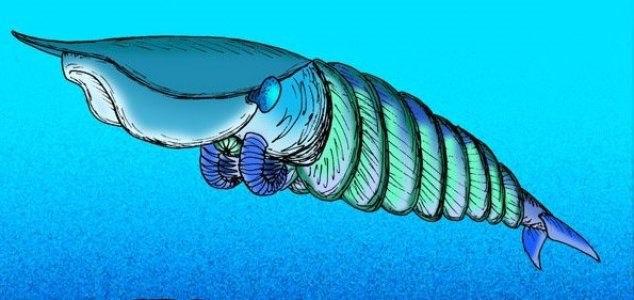
Over 500 million years ago, during the Paleozoic Era, the evolution of lobsters began. Ancestors of current lobsters can be traced back to ancient arthropods, according to fossil records. The "anomalocharids," as they were termed, were the ancestors of modern lobsters and had a segmented body and a protective exoskeleton. A shocking discovery was made when lobster predecessor remains were found by Mohamed Ben Moula, a Moroccan fossil hunter who discovered that this species of lobster was around 7 feet long! Aegirocassis benmoulae, bearing the name of the man who discovered it, was alive around 520-480 million years ago. It would have been one of the largest animals alive at that point.
The first real lobsters appeared during the Jurassic Period, about 200 million years ago. These prehistoric species, who belonged to the Nephropidae family, were very similar to their contemporary relatives. Their unusual body plan included a cephalothorax and abdomen as well as a tough exoskeleton, jointed appendages, and jointed appendages. They were smaller than the lobsters of today, though. The following changes undergone by the lobster ancestors would be a continuation of their adaptation and development.
Lobsters started to diversify and acclimatize to varied aquatic habitats as the Cretaceous Period commenced. During this time, new lobster families including the Homaridae and Palinuridae emerged. With some species living in shallow waters and others exploring deeper oceanic reaches, lobsters have evolved to flourish in a variety of settings and environments.
Over the course of millions of years, lobsters have continued to adapt and change, acquiring a variety of unique traits that help them succeed as apex predators. The American lobster (Homarus americanus) and the European lobster (Homarus gammarus) are two species well-known to us today. A variety of adaptations are present in modern lobsters that help them survive. Their powerful tails have uropods, which are fan-shaped appendages that enable quick backward propulsion and help them flee from predators. While their strong claws, employed for hunting and defence, serve as protection, they have also become identifiable traits.
There are many things that set prehistoric lobsters apart from their modern-day counterparts. Early lobsters had a more shortsighted body structure when compared to present-day lobsters. Like their modern counterparts, they had a segmented body and a protective exoskeleton. Modern lobsters, on the other hand, have more refined body characteristics, such as a distinct separation between the cephalothorax and the abdomen.
Today’s lobsters also are much more diverse when compared to their prehistoric ancestors. The Modern lobster exhibits a greater diversity of species. Lobsters evolved into a variety of families over millions of years, including the Nephropidae, Homaridae, and Palinuridae, as they adapted to various ecological niches. Every lobster family has particular qualities and involves explicit living spaces, adding to the general variety of lobsters we see today.
It's vital to note that the specific distinctions among ancient and present-day lobsters can be trying to decide because of the shortage of very much saved ancient lobster fossils. In any case, through a blend of fossil proof, relative life systems, and information on present-day lobster species, researchers have acquired significant bits of knowledge into the transformative changes that have moulded lobsters after some time.
The evolution of lobsters is a testament to the wonders of natural selection. From their prehistoric ancestors to the remarkable creatures we observe today, lobsters have continually adapted to various environments and developed incredible traits for survival. Their journey serves as a reminder of the intricate and ongoing process of evolution, urging us to appreciate and protect the rich biodiversity of our oceans.