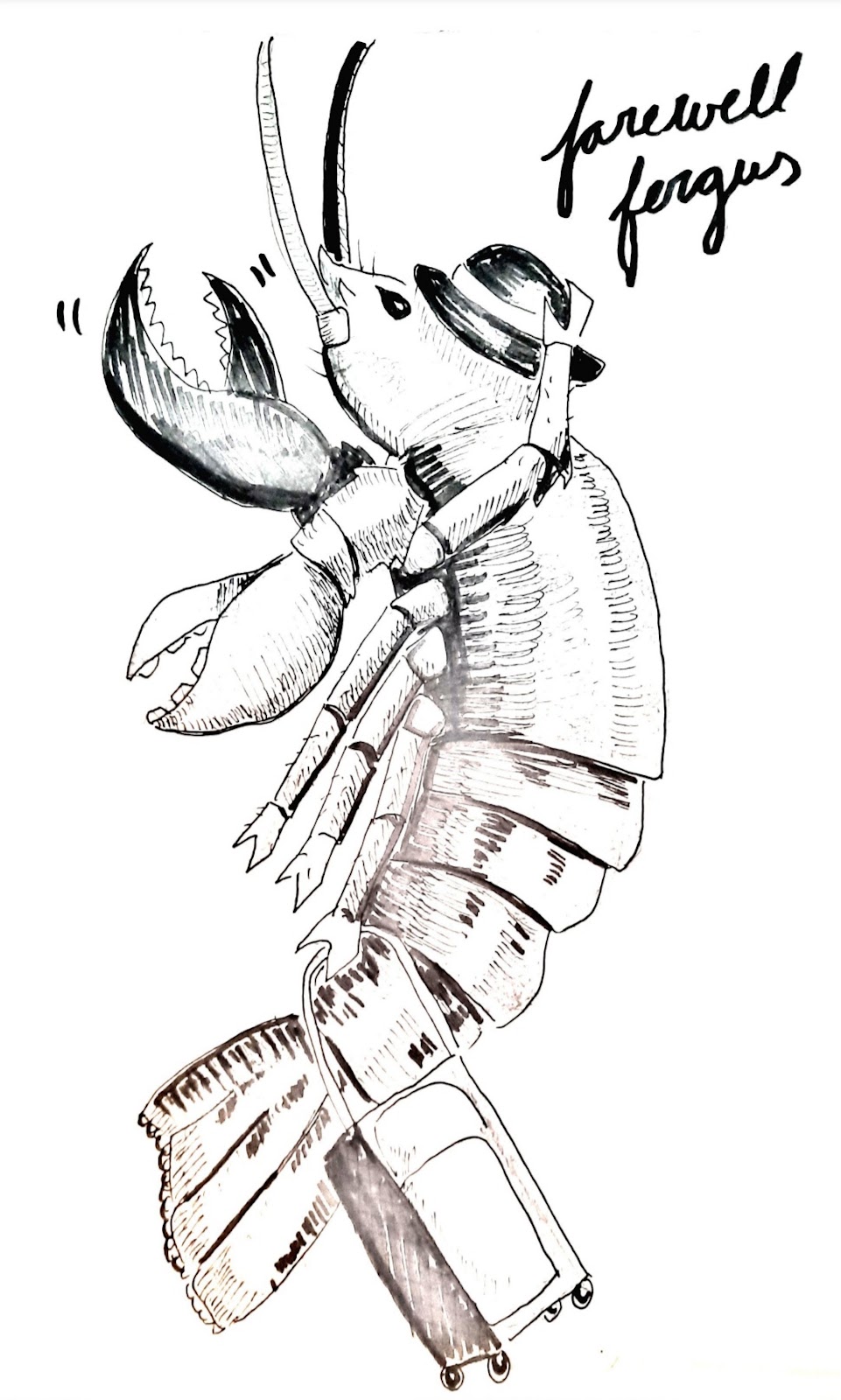
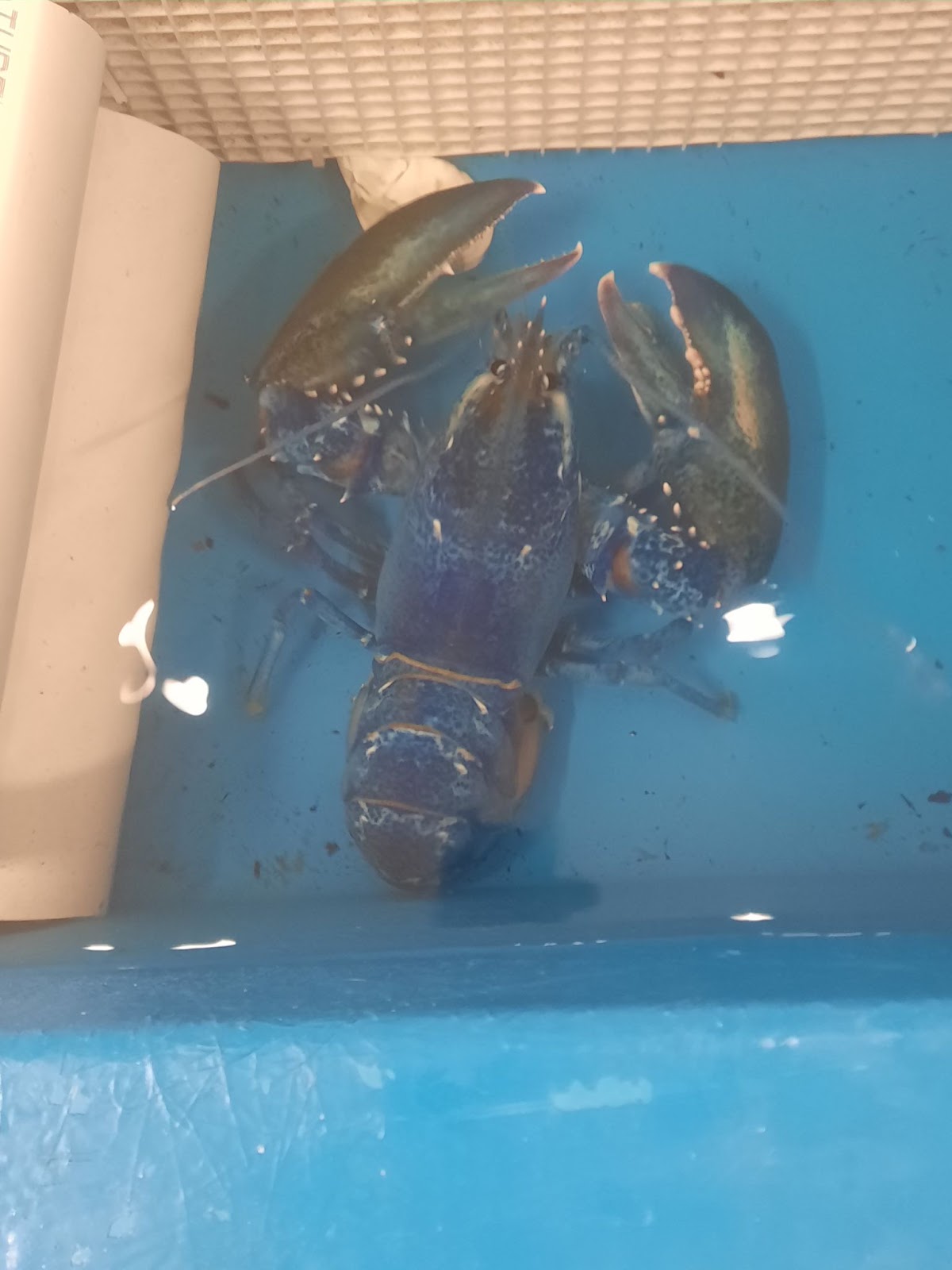
Once or twice a year, a lobster will go through a process known as moulting. Moulting is when a lobster’s internal body grows too big for their shell exoskeleton, and thus must shed the old shell to grow a new one. There are many factors that might influence a lobster’s moult, such as water temperature or age. Moulting has been a hot topic for the museum recently, with Pinky, our blue lobster, moulting June 6th, and our orange lobster, Dopey, showing signs she will be moulting soon. We also had our very own King lobster Fergus moult, however given his enormous size (11.12 pounds), he has been released so he may have enough space from other lobsters to regrow his new shell safely in a big rock den under the sea.
Signs of Moulting
The first sign a lobster is about to moult is the shell becoming softer. Usually, the sides of their carapace will be notably flimsy, and can be pushed in with a light touch. Lobsters are extremely delicate at this stage,and should only be handled if necessary. The reason why the shell is softer is because it is separating from the rest of the lobster’s body and thus is losing its support. If lobsters are squeezed, poked, or patted too roughly in this stage it could make molting more difficult, or even fatal. Hence here at the museum we are on high alert for any lobsters that may be showing this early sign, so that we can take the proper precautions to keep our lobster friends safe. A lobster may be soft for a good amount of time before the following stages. Things really begin when the carapace and tail break apart. A lobster will have to squeeze itself out of the gap when moulting begins. Local fishermen have also noted an early sign is a darker, thicker line running vertically down their carapace, indicating the body is beginning to loosen to give slack for the lobster to pull themselves out. One should not assume though that simply because the carapace has separated that the lobster will begin to moult within the next few hours, or even days. If our own orange lobster, Dopey, has shown us anything it's that lobster will gladly stall the process for weeks. The real beginning is when the lobster finally lays down on their side, that is when the magic of nature starts.
The Moulting Process
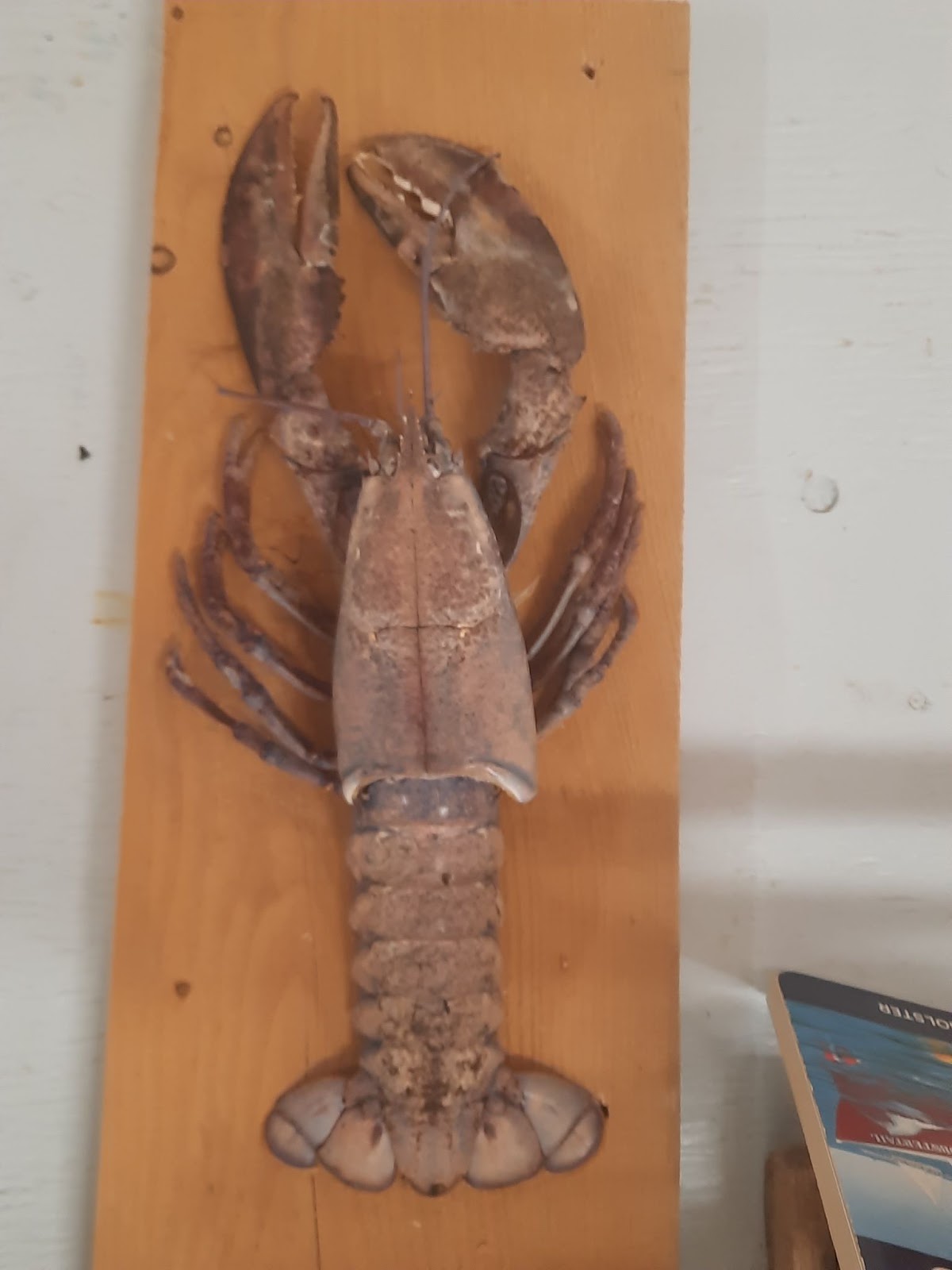
People are often confused about how a lobster actually comes out of its shell. When you look at a lobster it almost seems impossible that they can pull out their 3 pairs of antennas, 8 legs, and 2 massive claws, all while keeping the old shell intact. But lobsters have been at this game for millions of years, and evolution has perfected this tedious and intricate process. The inner body must be dehydrated first, so it can shrink in size. For any folks at home that have gone to eat a large lobster, only to find barely any meat inside when you cracked it open, there is a good chance that lobster was about to moult. The lobster will also produce a special fluid to help lubricate themselves for an easier slide out.The whole process can take the lobster between 30 mins to a few hours. Our blue lobster, Pinky, took 2 hours and we were lucky enough to catch some of it on video! This highlight reel is available on our instagram and facebook for those who are interested. We also have her old shell displayed in our gallery.
So, what next?
A lobster will typically moult when they also intend to mate. Lobster mating is a whole other complicated process that will be skipped over in this blog, but trust there are plenty of online resources for those curious about the deep sea birds and bees. After the shell has been removed and mating has taken place, a lobster will sometimes eat their old shell to regain some energy and calcium to help grow a new shell. The saying is true, you are what you eat, and for lobsters, what they eat is who they are. After quite a commotion, a lobster will hide under some rocks for a month to a month and a half while a new shell hardens. Lobsters are super vulnerable to predation at this time, including being attacked by other lobsters (once again, they are what they eat). It is risky business being a lobster, but here at NFM we make sure to keep our lobsters separated in their soft shell stage to keep them safe. Unfortunately, this is also why we could not keep our king lobster Fergus. He is so big that there would not be enough space in the tank to keep him separated from the others while still allowing him enough room to move around. It is for that reason that when we noticed him beginning to molt we made the tough choice to release back into the Northumberland Strait. We were lucky enough to have him just until the end of Lobster Carnival, before we said our goodbyes and good wishes to our 77 year old senior lobster. Given that lobsters can live to be over 100 years old, there is still a chance we may see him next summer.